
Unity of Vision, Diversity of Minds
10 months agoOne of the defining marks of a good physician is the capacity to approach illness with both objectivity and empathy. Mastery of the scientific literature, familiarity with disease processes, and an ability to interpret the body’s signals form only half the task. What elevates a physician from competent to outstanding is her willingness to honor the patient’s subjective experience—how the illness is lived, felt, and understood from the inside.
This dual lens, objective and subjective, is not only relevant to medicine. It mirrors the way relationships and societies function. From intimate partnerships and family units to communities, city-states, and the global human family, a similar pattern is revealed: Unity requires that we see one another clearly, not only in our shared humanity but also in our varied inner worlds. We may have moved beyond crude, non-scientific categorizations such as race, yet one truth remains constant: Even as we strive toward unity, we inhabit remarkably diverse biological and neurological realities. The growing recognition of neurodiversity—autism spectrum conditions, ADHD, anxiety spectrums, and other cognitive styles—reflects a deeper awareness that people process the world differently. These differences are not mere labels or trends; they are lived truths. And they shape the ways individuals perceive, relate, and respond.
Bahá’u’lláh’s words remind us: “Ye are all the fruits of one tree and the leaves of one branch.” This metaphor does not deny difference; it frames difference within a deeper oneness. A tree does not require uniformity among its fruits to be healthy. What it requires is coherence—a shared root, a shared life, a shared purpose.
Many interpersonal conflicts arise when individuals fail to appreciate each other’s subjective experience. It is easy to imagine, for instance, a person with high anxiety or ADHD—someone prone to emotional intensity—struggling to communicate with a loved one on the autistic spectrum, whose processing is more linear, literal, and less attuned to emotional nuance. In such moments, misunderstanding is not a moral failure; it is a neurobiological mismatch. Some argue that we are over diagnosing these conditions. Yet beneath the debate lies an undeniable fact: Human minds are diverse, and acknowledging that diversity helps us relate with greater compassion and clarity.
But acknowledgment alone is not enough. What allows diverse minds to genuinely hear and understand one another is a higher organizing principle—a force that channels individual perspectives toward shared insight. In the Bahá’í teachings, this process is called consultation: A method in which ideas, not egos, engage one another; where thoughts may clash so that truth may emerge, while individuals remain unified. In more extreme cases—where the differences are vast or deeply impairing—therapy, counseling, or biological interventions may be essential. These tools do not negate unity; they help remove the obstacles that prevent unity from flourishing.
If our vision is truly toward seeing ourselves as “leaves of one branch” and “fruits of one tree,” then bridging our neurological and emotional differences becomes not only possible—it becomes an expression of who we really are. In embracing both the diversity of our minds and the unity of our purpose, we take a step closer to a world where all can feel heard, understood, and connected.
.jpg)
"Dys"Functional Medicine
4 years agoThere is a human tendency to replace some thing that might not be fully effective with another solution that is even worse than the previous one. Sometimes the names functional medicine, integr...
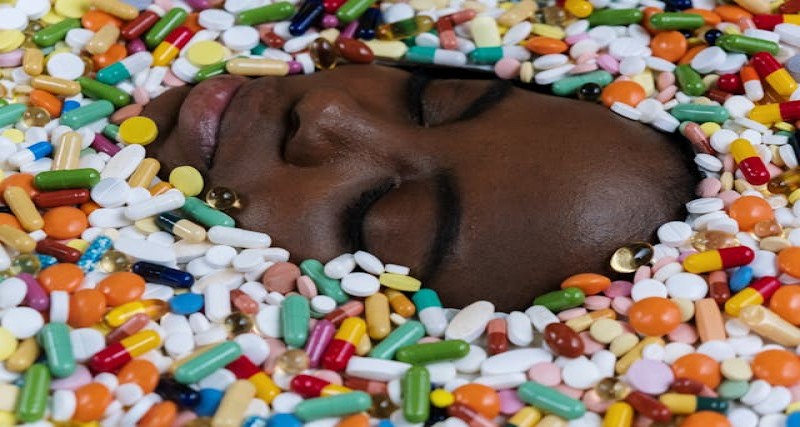
Beyond Dopamine: The Human Search for Meaning Behind Craving
11 months agoAs a psychiatrist, I have spent years listening to the quiet anguish that lives behind compulsive behavi...

The Reluctant Psychiatrist
7 years agoWhen I was a resident physician in training, I remember my excitement in mastering the principles of psychopharmacology. I was so eager to diagnose patients" problems and apply the right treatment....